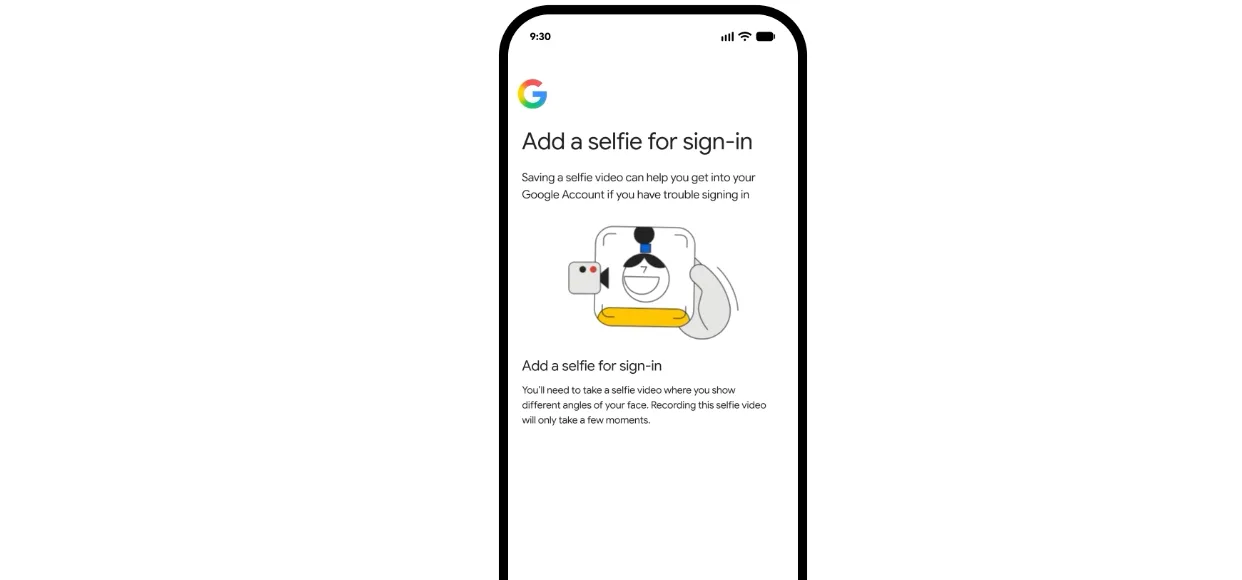
Google has announced a new selfie video sign-in option that allows users to verify their identity and recover access to their accounts using facial biometrics. The move reflects the growing shift across the technology industry toward biometric authentication as an alternative to traditional passwords.
The new feature is designed to give users an additional way to sign in if they lose access to their usual phone or computer or become locked out of their Google account.
How the Selfie Video Sign-In Works
To set up the feature, users are asked to look into their device’s camera and complete a series of simple guided head movements, such as turning left or right or nodding. These movements allow Google to capture multiple angles of the user’s face and create a reference selfie video.
If users need to verify their identity later, they can record a new selfie video. Google then compares the new recording with the saved reference video to confirm that the person attempting to sign in is the legitimate account owner.
Designed to Prevent Deepfake Attacks
One of Google’s primary goals is to ensure that a real person—not a bot, static image, or AI-generated deepfake video—is attempting to access the account.
According to Google, the system combines multiple layers of security, including matching the new video against the saved selfie, requiring users to perform live facial movements, and applying existing fraud detection systems to identify suspicious sign-in attempts.
These “liveness” checks are becoming increasingly important as AI-generated images and videos continue to improve in realism.
Biometric Verification Is Becoming the New Standard
The introduction of selfie video authentication highlights a broader industry trend toward passwordless security.
As cybercriminals increasingly use artificial intelligence to create convincing fake identities, businesses handling account logins, financial transactions, and sensitive personal information are adopting biometric verification and liveness detection as essential security measures.
Privacy Concerns Remain
While the new feature could significantly improve account recovery and reduce identity fraud, it also raises questions about biometric privacy and the collection of facial data.
Regulators around the world have intensified scrutiny of companies developing facial recognition and voice-based authentication technologies, particularly regarding how biometric data is stored, processed, and protected.
Google says selfie videos are securely encrypted, remain protected even when not in use, and can be deleted from a user’s Google Account at any time.
The Future of Passwordless Authentication
Google’s latest update reinforces the industry’s move toward more secure authentication methods, including passkeys, facial recognition, and biometric verification.
As AI-powered fraud becomes increasingly sophisticated, technologies capable of confirming both identity and human presence are expected to play a central role in the future of online account security.
Read the article in