As major global companies continue to spend billions of dollars on artificial intelligence and automation, one important question is becoming harder to ignore: can technology alone replace human experience in complex industries?
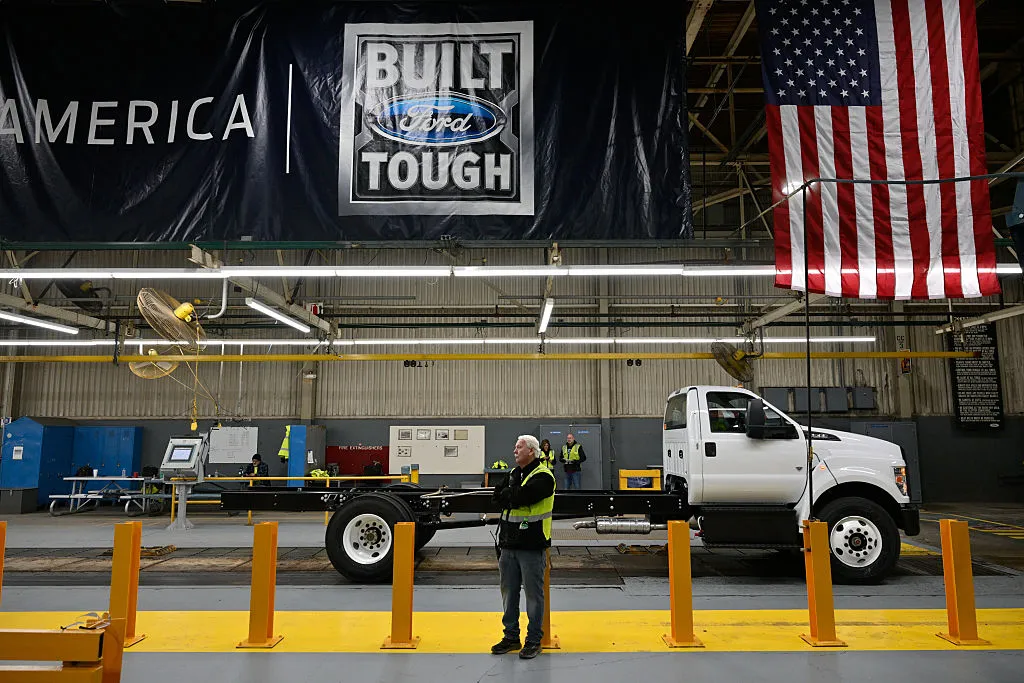
Ford’s latest move offers a clear answer. The automaker has rehired 350 veteran engineers after its artificial intelligence and automated quality systems failed to deliver the level of quality the company expected in its design and manufacturing processes.
Why Ford Brought Back Veteran Engineers
According to a Bloomberg report, Ford Chief Operating Officer Kumar Galhotra said the company had been relying more heavily on automated quality systems, but the results were disappointing.
As a result, Ford decided to bring back technical specialists with deep industry experience. Some of these engineers were former Ford employees, while others had been working for suppliers connected to the automotive industry.
Their main role is to identify potential failure points in parts and components before they ever reach the plant floor. This allows Ford to detect problems early, instead of dealing with them after production or after vehicles reach customers.
AI Was Not Enough on Its Own
Ford’s decision comes at a time when automakers and industrial companies are racing to use artificial intelligence in design, data analysis, quality control, and error reduction. However, Ford’s experience shows that relying too heavily on AI may not be enough in industries that require deep technical and engineering judgment.
Charles Poon, Ford’s vice president of vehicle hardware engineering, said the company had mistakenly believed that simply introducing artificial intelligence and feeding it design requirements would be enough to produce a high-quality product.
But the reality proved more complex. There is a major difference between AI’s ability to process data and an experienced engineer’s ability to anticipate problems, understand component behavior, and identify small technical issues that could later turn into costly failures.
Who Are the “Gray Beard” Engineers?
Ford refers to these experienced specialists as “gray beard engineers,” a term used to describe veteran engineers with years of practical experience in solving complex technical problems in factories, production lines, and vehicle development.
Their role is not limited to reviewing designs or identifying defects. They are also helping train younger engineers and pass on practical knowledge that cannot be learned from automated systems alone.
In addition, these specialists are helping Ford improve its AI tools by retraining and reprogramming them to better understand real-world engineering and manufacturing challenges.
Ford Is Not Abandoning AI
Despite this move, Ford is not stepping away from artificial intelligence or automation. Instead, the company appears to be building a more balanced model that combines technology with human expertise.
AI can analyze huge amounts of data, detect patterns, and speed up certain parts of the workflow. But it still needs human experts who can interpret results, assess risks, and make accurate decisions in complex situations.
This is the key lesson from Ford’s experience: the problem is not the use of AI itself, but the assumption that AI can solve everything without experienced human oversight.
Lower Warranty and Recall Costs
According to Ford CEO Jim Farley, the decision is already delivering positive results. The return of veteran engineers has helped reduce warranty and recall costs, contributing to hundreds of millions of dollars in cost savings for the company.
Warranty and recall costs are among the most sensitive areas in the automotive industry. They do not only affect profitability; they also influence customer trust and brand reputation.
When a company like Ford can identify problems before a product reaches the market, it saves money, protects its reputation, and reduces the risk of future quality or safety issues.
Ford Tops Quality Ranking
Ford also said it ranked first among mainstream brands in the latest J.D. Power Initial Quality Study released this week.
This result supports the idea that combining human experience with smart tools may be more effective than relying on technology alone, especially in a highly complex sector like automotive manufacturing.
A Wider Lesson for Global Companies
Ford’s experience is not only relevant to the automotive industry. It sends a broader message to companies investing heavily in artificial intelligence.
Technology can be a powerful tool for improving efficiency, but it does not always replace accumulated human experience. AI systems may process information faster, but experienced professionals are still needed to guide, review, and challenge the outputs.
As companies continue to invest billions in AI, the real opportunity may not be replacing humans entirely, but building teams that know how to use technology intelligently.
Read the article in